Introduction to Pokémon Card Authentication
Spotting fake Pokémon cards is an essential skill for any collector, whether you’re buying singles online, trading locally, or sorting through an old collection. Counterfeits have become more convincing over the years, which makes knowing what to look for – print quality, texture, font, and holo patterns – more important than ever. Keeping authentic cards protected in a proper pokemon binder also helps you compare questionable cards against verified real ones in good condition.
In this collector’s guide, we’ll walk through the most reliable ways to tell if a Pokémon card is fake, from quick visual checks to more detailed tests experienced collectors use. You’ll learn common red flags, which cards are most often counterfeited, and how mistakes typically happen.

Why Fake Pokémon Cards Are So Common
Fake Pokémon cards are widespread for a few key reasons, all tied to demand, accessibility, and gaps in buyer knowledge.
Popularity and Resale Value
The Pokémon Trading Card Game is one of the most popular collectible card games in the world. Certain cards can sell for hundreds or even thousands, which makes the market attractive not only to collectors, but also to counterfeiters. High demand combined with the perception of easy profit creates strong incentives for fake cards to be produced and sold.
Online Marketplaces and Bulk Lots
Online marketplaces make it easy for counterfeit cards to circulate. Fake cards are often sold in:
- Large bulk lots
- “Too good to be true” bundles
- Listings with vague photos or descriptions
Platforms like eBay are known for having counterfeit Pokémon cards, so buyers should be especially cautious and verify sellers’ reputations and policies before purchasing.
Because buyers can’t physically inspect cards before purchase, subtle issues like incorrect texture, print quality, or color often go unnoticed until after delivery.
Why Beginners Are Most Targeted
New collectors are the most common targets because they may:
- Be unfamiliar with authentic card textures and printing
- Focus on card artwork rather than fine details
- Assume all cards sold online are legitimate
Counterfeit sellers rely on this lack of experience, knowing that beginners are less likely to question minor inconsistencies or recognize common warning signs of fake Pokémon cards.
Flea markets are common sources of fake Pokémon cards and should be approached with caution, especially by beginners.
Quick Answer: How to Tell If a Pokémon Card Is Fake
- Print quality: Real Pokémon cards have sharp, clean printing; fake cards often look blurry, washed out, or pixelated.
- Card texture and thickness: Authentic cards feel slightly textured and layered, while fakes may feel thin, papery, overly smooth, or plastic-like. A lack of texture is a dead giveaway for counterfeit Pokémon cards.
- Font and text errors: Misspellings, incorrect fonts, uneven spacing, or text that looks too bold or too thin are common signs of fake cards. The font used on Pokémon cards is very distinct and hard to replicate.
- Holographic pattern: Genuine holo cards use consistent, set-specific foil patterns; fake cards often have random, overly shiny, or incorrect holographic effects.
- Color accuracy on the card back: Real cards have a deep blue back with crisp details, while fakes are often lighter, duller, or tinted purple or gray.
- Light test: The light test can help spot fakes-real Pokémon cards allow very little light to pass through when held up to a light source, while fake cards often illuminate easily.

Check the Card’s Print Quality and Text
One of the fastest ways to spot a fake Pokémon card is by closely examining how the text and symbols are printed. While fake cards can appear convincing because their text is often copied directly from real cards, there are still telltale signs. Note small details in print quality and text, as authentic cards are produced with high-quality printing standards, while counterfeit cards often show small but consistent mistakes. Many fake Pokémon cards will have multiple spelling or grammatical mistakes in the text.
Font Size, Style, and Alignment
- Blurry or bold text: Real Pokémon cards use crisp, uniform fonts. Fake cards often have text that looks fuzzy, overly thick, or uneven.
- Incorrect spacing: Watch for text that sits too close together, runs off the text box, or doesn’t line up cleanly with borders.
- Misspellings or grammar errors: Official Pokémon cards are carefully proofread, so spelling mistakes or awkward wording are strong indicators of a fake.
Energy Symbols and Icons
- Incorrect shapes: Energy symbols on real cards have precise, consistent shapes. Fakes may show distorted or slightly misshapen icons.
- Poor alignment: Symbols should be centered and evenly spaced. Off-center or crooked icons are a common counterfeit sign.
- Low-resolution printing: Blurry edges, pixelation, or muddy colors around symbols often indicate a card was printed using low-quality sources rather than official artwork.
Examine the Card Stock and Texture
Beyond visual details, the physical feel of a Pokémon card is one of the most reliable ways to tell if it’s real or fake. Real Pokémon cards are printed with multiple layers of paper, resulting in a specific thickness. Authentic cards are made with a specific layered stock that’s difficult for counterfeiters to replicate.
High-quality Pokémon cards feel sturdy, while counterfeit cards often feel thin, flimsy, or overly glossy.
Genuine Pokémon cards have a thin black paper layer (or black layer of ink) between the white paper layers, which can be seen on the edges of the card. You can use a bright light to check for this black paper layer inside the card-hold the card up to a strong light source and look for the dark line running through the middle. This is a key indicator of authenticity, as fake cards often lack this feature.
Thickness and Flexibility
- Too thin or too stiff: Real Pokémon cards have a balanced flexibility. Fake cards may bend too easily or feel unusually rigid.
- Feels papery instead of layered: Authentic cards are made from layered cardstock with a dark core, while fakes often feel like a single sheet of paper or cheap cardboard.
Surface Texture
- Real cards have a subtle texture: Genuine Pokémon cards usually feel slightly textured or satin-like, especially under light.
- Fakes often feel flat or glossy: Counterfeit cards may feel overly smooth, slick, or plastic-like due to lower-quality printing and coatings.
Inspect the Holographic and Foil Pattern
Holographic details are one of the easiest areas to spot inconsistencies, especially because Pokémon uses specific foil patterns that vary by set and era. The art, including texture and printing quality, is a crucial aspect for identifying authentic cards, as legitimate cards feature distinct artistic and printing details that fakes often lack. Counterfeit cards often get these details wrong.
Real holographic patterns on Pokémon cards are consistent and parallel, while fake ones might display vertical lines or uniform coverage. Additionally, reverse holos have specific patterns and layered printing that can help distinguish real cards from fakes, with authentic reverse holos showing consistent holo placement and pattern consistency.
Correct Holo Patterns by Era
- Consistent patterns in real cards: Authentic Pokémon cards use set-specific holographic patterns that repeat in a uniform way and match other cards from the same release.
- Random or overly shiny foils in fakes: Fake cards often use generic foil sheets that look too reflective, chaotic, or don’t match known patterns from official sets.
Holo Placement and Coverage
- Bleeding foil: On fake cards, the holographic foil may spill into areas that should be non-holo, such as text boxes or borders.
- Incorrect shine direction: Real holo cards reflect light in controlled, directional ways, while fakes may shine evenly from all angles or reflect light unnaturally.
Compare the Back of the Pokémon Card
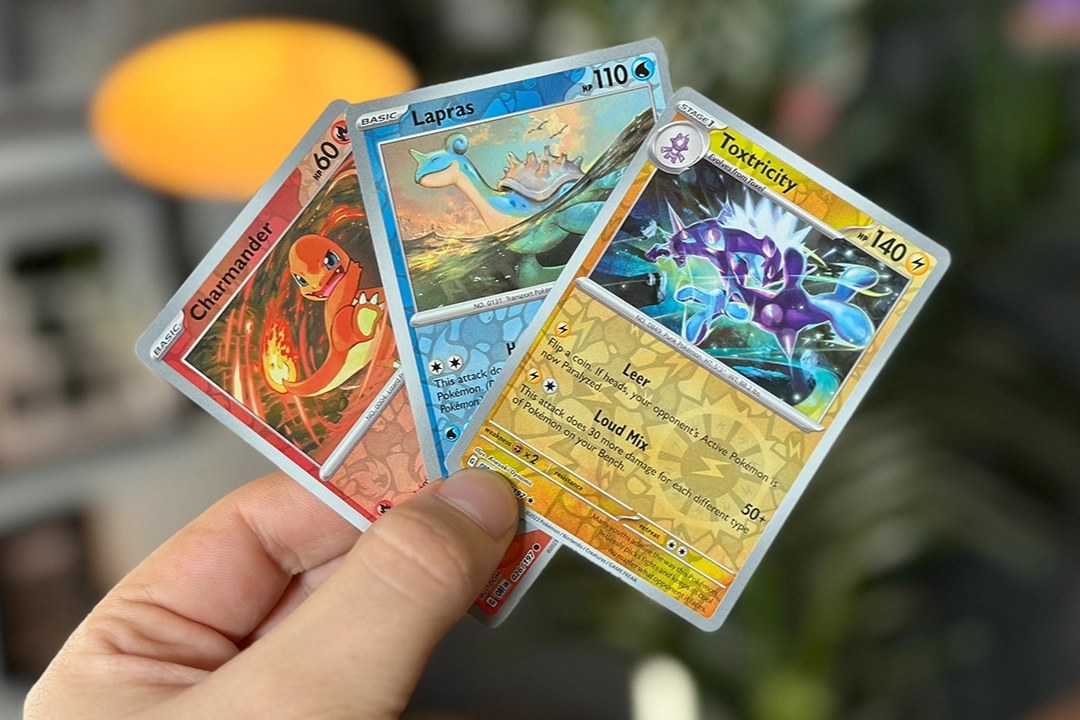
The back of a Pokémon card is often overlooked, but it’s one of the most reliable areas for spotting fakes. Always compare your card to an official image or picture from a reputable online database to check for any differences. Because the design is standardized across all official cards, even small differences can be a red flag.
Color Saturation
- Real cards have deep blue backs: Authentic Pokémon cards feature a rich, consistent blue color on the back that looks bold and saturated.
- Fakes are often washed out or purple-tinted: Counterfeit cards may appear lighter, duller, or slightly purple or gray compared to real cards.
Poké Ball Design Accuracy
- Sharp lines vs blurry edges: On real cards, the Poké Ball graphic has clean, crisp lines. Fakes often show fuzzy edges or low-resolution printing.
- Centering issues: The Poké Ball should be well-centered within the design. Off-center placement or uneven borders can indicate a fake Pokémon card.
Check Card Details and Formatting
Small details in a Pokémon card’s layout and metadata are often where counterfeit cards fail. To recognize genuine Pokémon cards, it is important to examine features such as texture, font, holo foiling, card backs, and layering, as authentic cards have distinct qualities that fakes often lack. These elements follow strict standards on real cards, making inconsistencies easier to spot once you know what to look for.
When distinguishing real from fake Pokémon cards, always check for differences in printing quality, holographic patterns, and card layering. If you have a suspicious card, compare it directly to an authentic one. For best results, use two cards side-by-side to spot any discrepancies. For high-value Pokémon cards, it is recommended to use professional grading services like PSA or CGC for authentication.
Additionally, compare any suspect card side-by-side with an official scan from databases like PkmnCards or the Pokémon Trading Card Database for definitive verification.
Set Symbols and Copyright Dates
- Missing or incorrect symbols: Authentic cards always include the correct set symbol for their release. Fake cards may use the wrong symbol, a poorly drawn version, or omit it entirely.
- Wrong year for the card set: The copyright date at the bottom of the card should align with the set it belongs to. A mismatch between the card’s artwork, set symbol, and printed year is a strong sign of a fake.
HP Numbers and Attack Damage
- Unrealistic values: Fake cards often exaggerate HP or attack damage to make a card look more powerful. Extremely high numbers that don’t match official cards from the same era are a red flag.
- Layout inconsistencies: On real cards, HP placement, attack text, and damage numbers follow consistent spacing and alignment. If elements look crowded, misaligned, or oddly positioned, the card is likely counterfeit.
Online Research and Resources
When you’re unsure about the authenticity of a Pokémon card, turning to online research and resources can make all the difference. Trusted websites like Pokebeach, Bulbapedia, and TCGplayer.com offer detailed card databases, high-quality images, and up-to-date pricing guides, making it easy to compare your card to legitimate examples.
Online communities, such as Reddit’s r/pokemontcg, are also valuable for connecting with experienced collectors who can help you spot fake Pokémon cards and share tips on what to look for. Before buying from any seller, especially online, take the time to research both the card and the seller’s reputation.
Comparing your card to verified images and seeking advice from the community can help you avoid falling for fake Pokémon cards and ensure you’re adding only authentic cards to your collection.
Sealed Product Verification
Buying sealed Pokémon products like booster packs and boxes can be exciting, but it’s important to verify their authenticity before making a purchase. Fake packs are a dead giveaway if you know what to look for-authentic booster packs have a specific wrapper texture, clear Poké Ball logos, and consistent packaging quality. If a pack feels off, has missing logos, or the wrapper texture seems unusual, it’s likely a fake.
Another good example is checking the weight and feel of the pack; counterfeit packs often feel lighter or heavier than genuine ones. Always be aware of deals that seem too good to be true, as suspiciously low prices are a common sign of fake packs. By staying alert and examining sealed products closely, you can avoid wasting money on counterfeit goods.
Rare and Valuable Cards
Rare and valuable Pokémon cards are prime targets for counterfeiters, so it’s crucial to be extra vigilant when authenticating these cards. Carefully inspect the card’s texture, font, and artwork, comparing them to known legitimate cards to spot any differences. Look out for spelling mistakes, wrong font styles, or other errors-these are classic signs of a fake Pokémon card.
While some collectors mention the rip test to check for the black layer inside a real card, this method can damage the card and is not recommended for rare or valuable cards. Instead, focus on safer checks, such as examining the blue border on the back and ensuring the artwork matches official examples.
Always be aware of the risks when buying rare cards, and use online resources to verify their legitimacy before making a purchase. By taking these precautions, you can confidently add only authentic, valuable Pokémon cards to your collection.
Frequently Asked Questions About Fake Pokémon Cards
How can you tell if a Pokémon card is fake?
You can usually spot a fake Pokémon card by checking print quality, card texture, font accuracy, holographic patterns, and the color of the card back. Misspellings, blurry text, incorrect holo effects, and washed-out colors are some of the most common warning signs.
Are fake Pokémon cards illegal?
Yes. Fake Pokémon cards are considered counterfeit products, and selling them is illegal in many countries. Even buying or reselling counterfeit cards can cause issues on online marketplaces, as they violate intellectual property laws and platform policies.
Do fake Pokémon cards pass grading?
No. Professional grading companies inspect cards closely for authenticity. Fake Pokémon cards do not pass grading and are rejected once inconsistencies in printing, cardstock, or holographic patterns are identified.
Are gold Pokémon cards real?
Most gold Pokémon cards are fake. While there are a few official gold-colored promotional cards, the majority of all-gold, metal, or plastic Pokémon cards sold online are counterfeit and not part of any official Pokémon card set.